




The centrepiece of the commercial vehicle world is this week focused on the German city of Hannover, where IAA Transportation, Europe’s leading CV show, is taking place between 15th-20th September.
The show makes use of 15 of the halls, as well as outside spaces for test drives, of the Messegelände Hannover (the Hanover Fairground), the largest exhibition centre in the world. Virtually the whole of the world’s light-commercial, heavy goods and public service vehicle industry represented, as well as the hundreds of specialists that support the vehicle manufacturers.
More than 70% of the exhibitors at the show are from outside Germany, reflecting the importance of the event both throughout Europe and beyond, and this very much includes the UK. Organisers report more than 150 world premieres of vehicles and products at the show, and many of the new vehicles and even brands being unveiled in the Hannover halls will be on UK streets within the next few years.
More contentious themes being highlighted at Hannover are also highly relevant to the UK commercial audience, some even more so than in mainland Europe. While the importance of electric vehicles continues to increase with several new EVs making their debut, the speed of charging-point roll-out continues to cause concerns, in Europe as it does the UK.
Even more criticism is being levelled at the spread, or lack of it, of hydrogen infrastructure for use by fuel-cell vehicles. The development of hydrogen vehicles, especially in the heavy goods sector, is pressing ahead, a major advantage of the technology being that its only emission is water, but the roll-out of infrastructure is not keeping pace.
The German Association of the Automotive Industry expects that by 2030, Europe will require around 2,000 truck-capable hydrogen refueling stations with a capacity of roughly two metric tons of hydrogen per day and currently there are just 213.
The UK, meanwhile is lagging further behind, with the current evidence suggesting that in Britain hydrogen is simply not considered a serious future option for vehicle fuelling. Some public points that were experimented with by the likes of Shell have since closed, and currently across the country there are only around a dozen commercial sites where a hydrogen vehicle can be refuelled.
For the light-commercial sector two further themes seem to be dominating this year’s show. ‘Uptime’ appears to be the word of the week, with manufacturers rushing to either introduce or enhance support systems to ensure vehicles spend a minimal amount of time off the road for servicing, maintenance or repair.
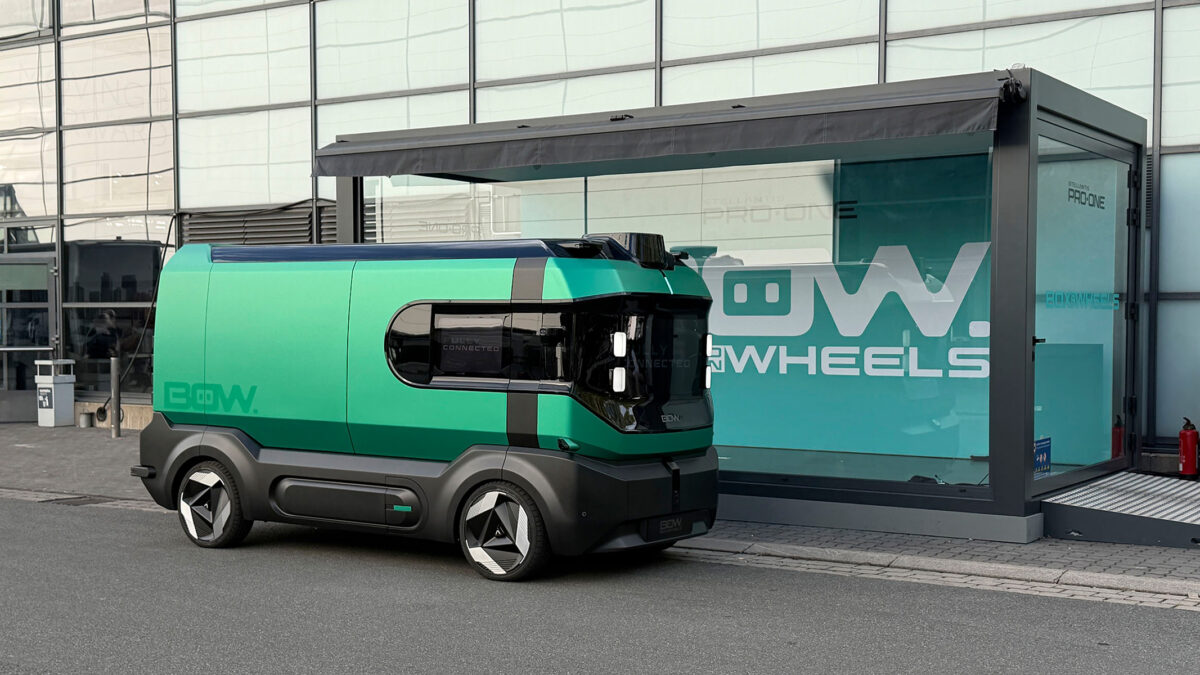
Meanwhile at a show which unlike the European and particularly UK car sector, is not being dominated by new Chinese brands, those that are present are pressing ahead with autonomous delivery vehicles – and being chased by the ‘legacy’ manufacturers. At least three robot delivery vehicles are on show, but it’s the Bow, literally standing for ‘Box on Wheels’ from Stellantis that is getting the most attention, an example shuttling up and down the roadways between halls.
How long before we see such vehicles on UK roads? A little while yet, as currently they are not permitted. But in June the government launched a consultation for views on self-driving vehicles and a new future for them could be mapped out sooner than you might expect. Watch this space…


You must be logged in to post a comment.