




Ford has unveiled a fifth member of its Transit LCV family, targeted directly at urban operators wanting to make the switch to electric.
The Transit City will be available in ‘L1H1’ and ‘L2H2’ van sizes and a chassis cab, and will be built by Jiangling Motors Corporation (JMC) in China – the company has a long relationship with Ford and has been building Transits for the Chinese market for 30 years.
Sitting in the range between the current E-Transit Courier and E-Transit Custom, the new model has according to Ford’s electric commercial vehicles chief engineer Simon Robinson been specifically geared to the financial challenges faced by urban operators.
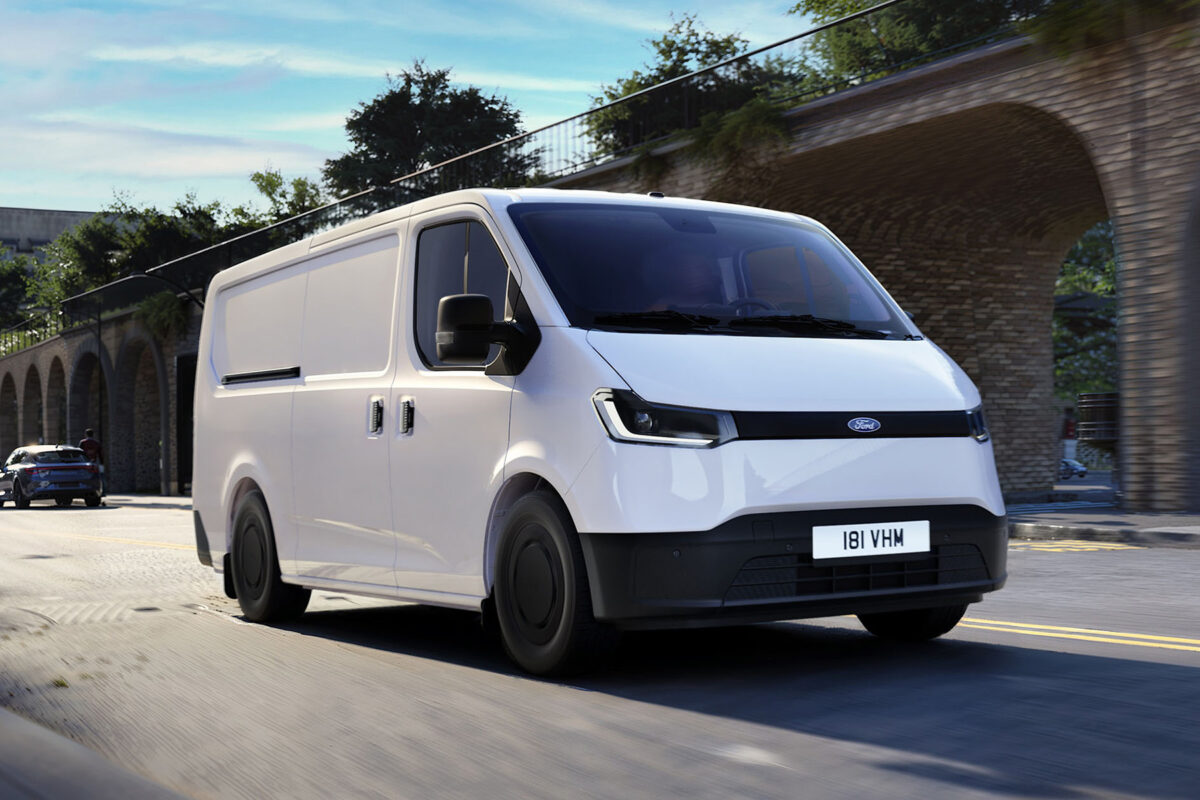
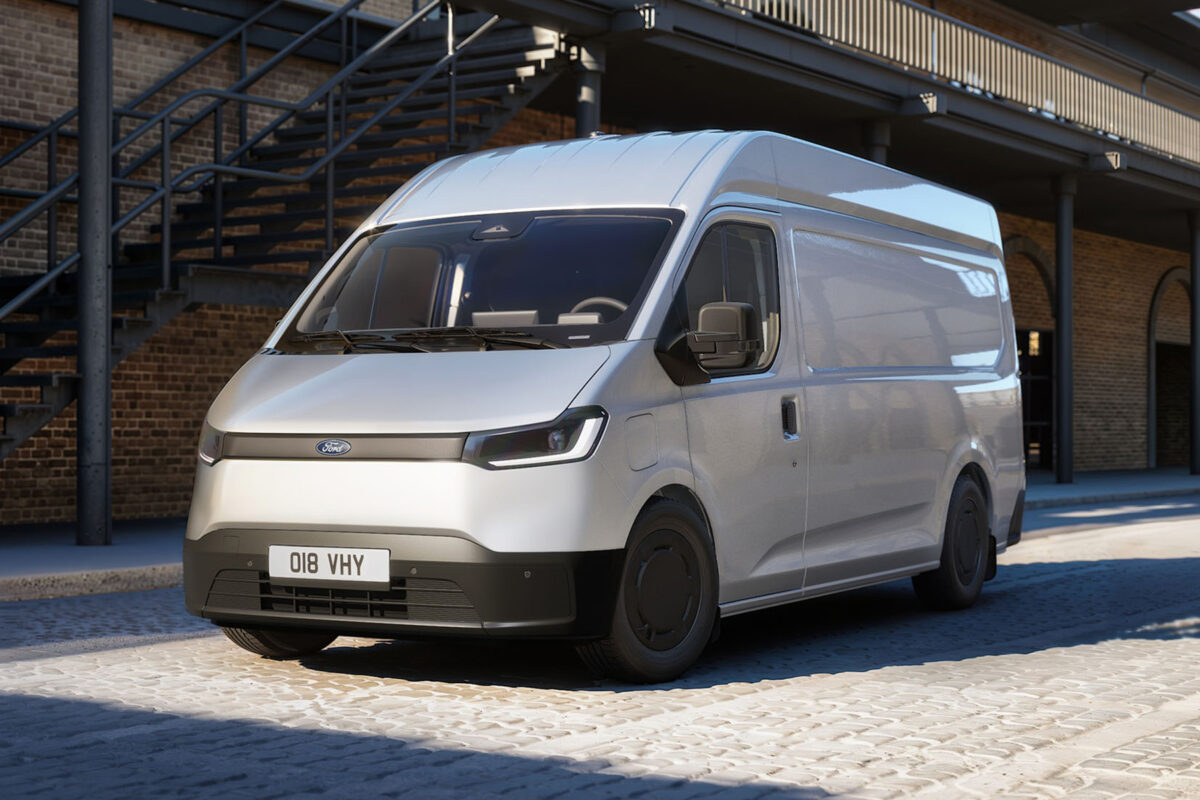
Typical uses are expected to be for postal and last-mile deliveries, and service, maintenance and repair businesses, while the chassis cab will be pitched towards municipal and garden contractors and supermarket delivery operations. “These customers are looking for a targeted business tool, an EV that gets the job done at the lowest possible cost,” Robinson said.
The Transit City will be available as a single model with no options – it is front-wheel-drive, powered by a 100kW motor drawing from a 56kWh LFP battery. The official WLTP range is up to 157 miles on the L1H1 model.
Robinson quoted data gathered from Ford Pro customers showing that 90% of EV customers drive less than 68 miles a day. “We believe the battery size is well suited to needs of urban operators – city delivery drivers make in excess of 200 parcel drops a day,” he said, adding that those requiring higher mileage could choose the E-Transit Custom.
The Transit City can recharge at an average 67kW DC, going from 10 to 80% in around 30 minutes – a 10-minute charge will add around 30 miles of range. Overnight charging from 10 to 100% on an 11kW wallbox will take just over five hours. According to Ford personnel businesses using off-peak electricity will achieve significant energy savings compared to diesel, alongside service cost savings some 40% lower than diesel – the Transit City has 2-year 25,000 mile service intervals.
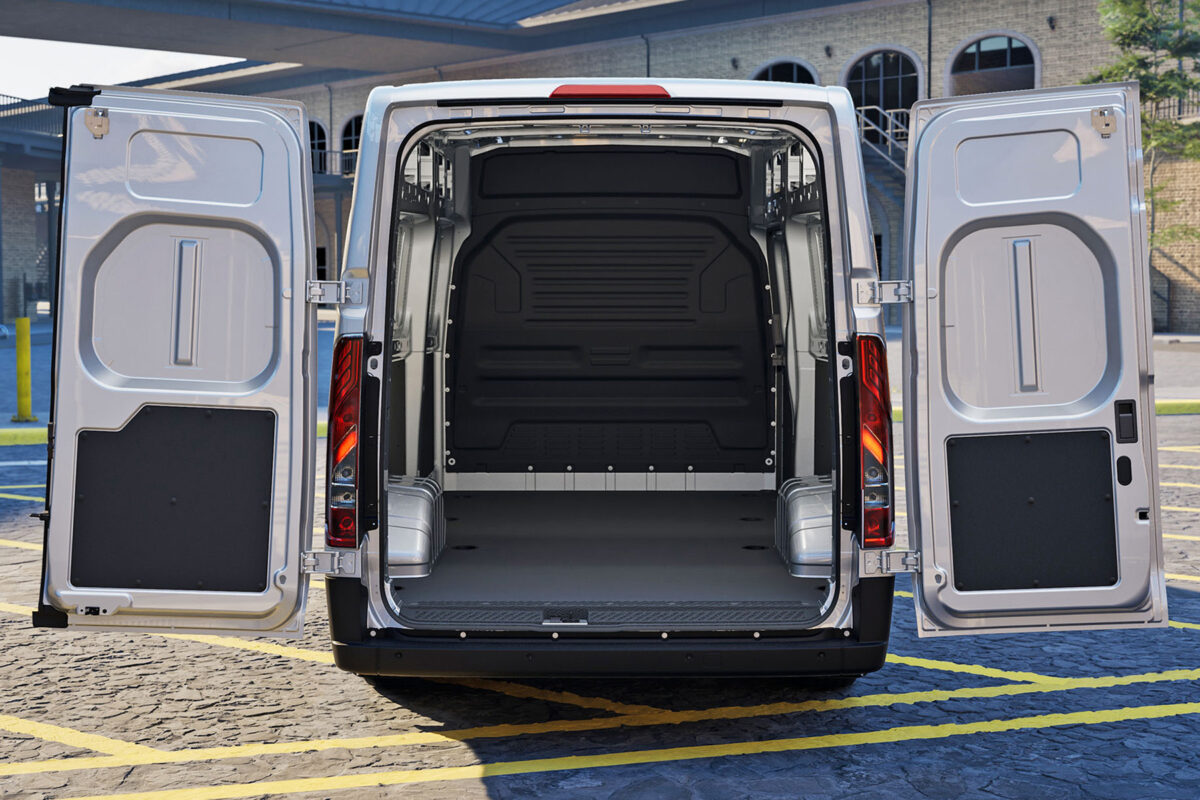
Maximum payload of the Transit City exceeds 8 cubic metres in the L2H2 version, alongside a 1275kg payload and a maximum load length of more than three metres. However to maintain its affordability the Transit City has no towing capability, Ford stating that its research has indicated this is not a priority for the target market.
Robinson added that the chassis cab has sparked great interest amongst Ford Pro’s approved converters, being the manufacturer’s first such offering in the one-tonne segment. “It includes valuable lessons learnt from our 2-tonne Transit chassis cab,” he said, adding that converters are already developing box van, racking van, dropside and flatbed variants of the Transit City.
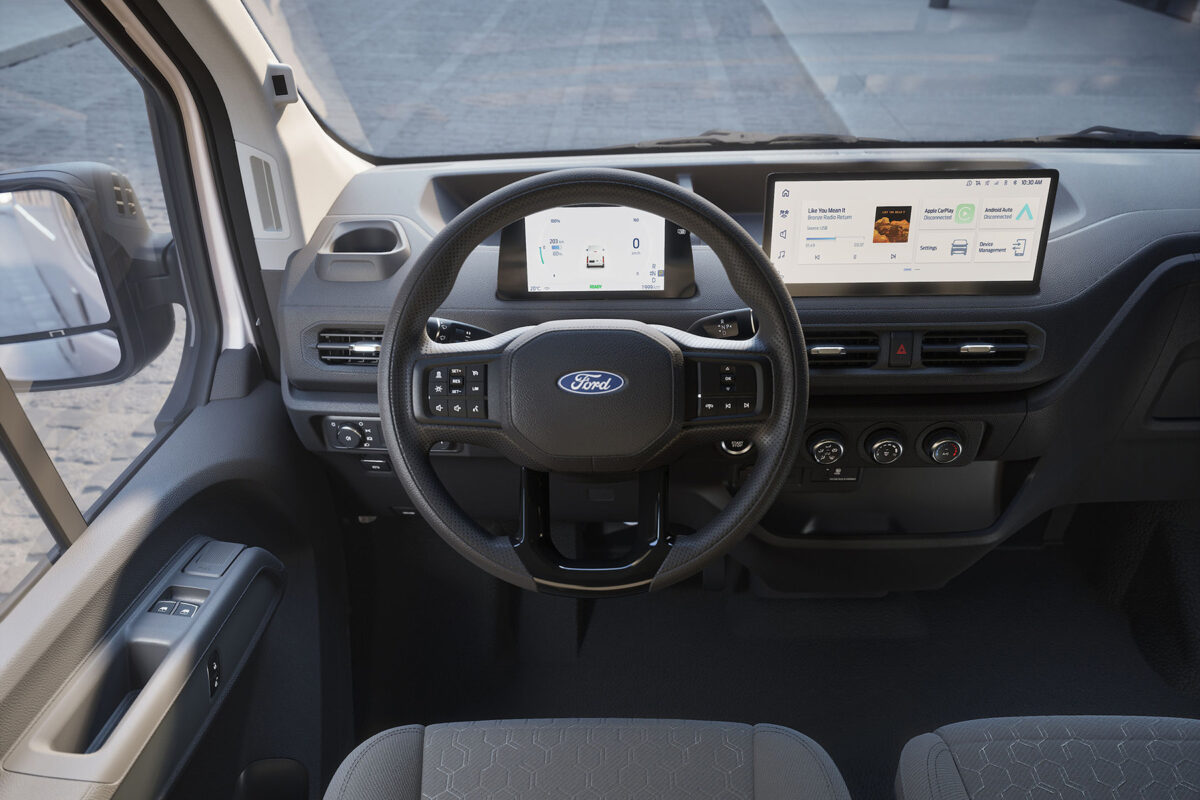
Standard specification for the new model will include keyless start, manual air conditioning, a heated driver’s seat and a 12-inch touchscreen with smartphone integration. A comprehensive menu of ADAS driver aids is also standard including adaptive cruise control, parking sensors and a rear-view camera. While the vehicle does not include a modem, plug-in telematics will be available.
Hans Schep, general manager, Ford Pro Europe, said that adding a new member to the Transit range does not happen very often. “We are very proud and excited to introduce the Transit City,” he added. “As we all know Transits are all about getting the job done – we strongly believe that Transit City will continue that tradition based on its efficiency and minimising costs for urban businesses.”
The Transit City is expected to be on UK roads in late 2026, with prices set to be announced in the next few weeks when orders will open.


You must be logged in to post a comment.