




The UK new light commercial vehicle (LCV) market recorded a fifth consecutive month of growth in August, with a very modest 1% rise in monthly registration totals year-on-year, according to the latest figures from the Society of Motor Manufacturers and Traders (SMMT).
While the LCV market’s start to 2026 was rather concerning with three months of year-on-year sales declines, registration numbers have picked up since, the SMMT reporting that sales totals for the year are now up 4% when compared the first eight months of 2025.
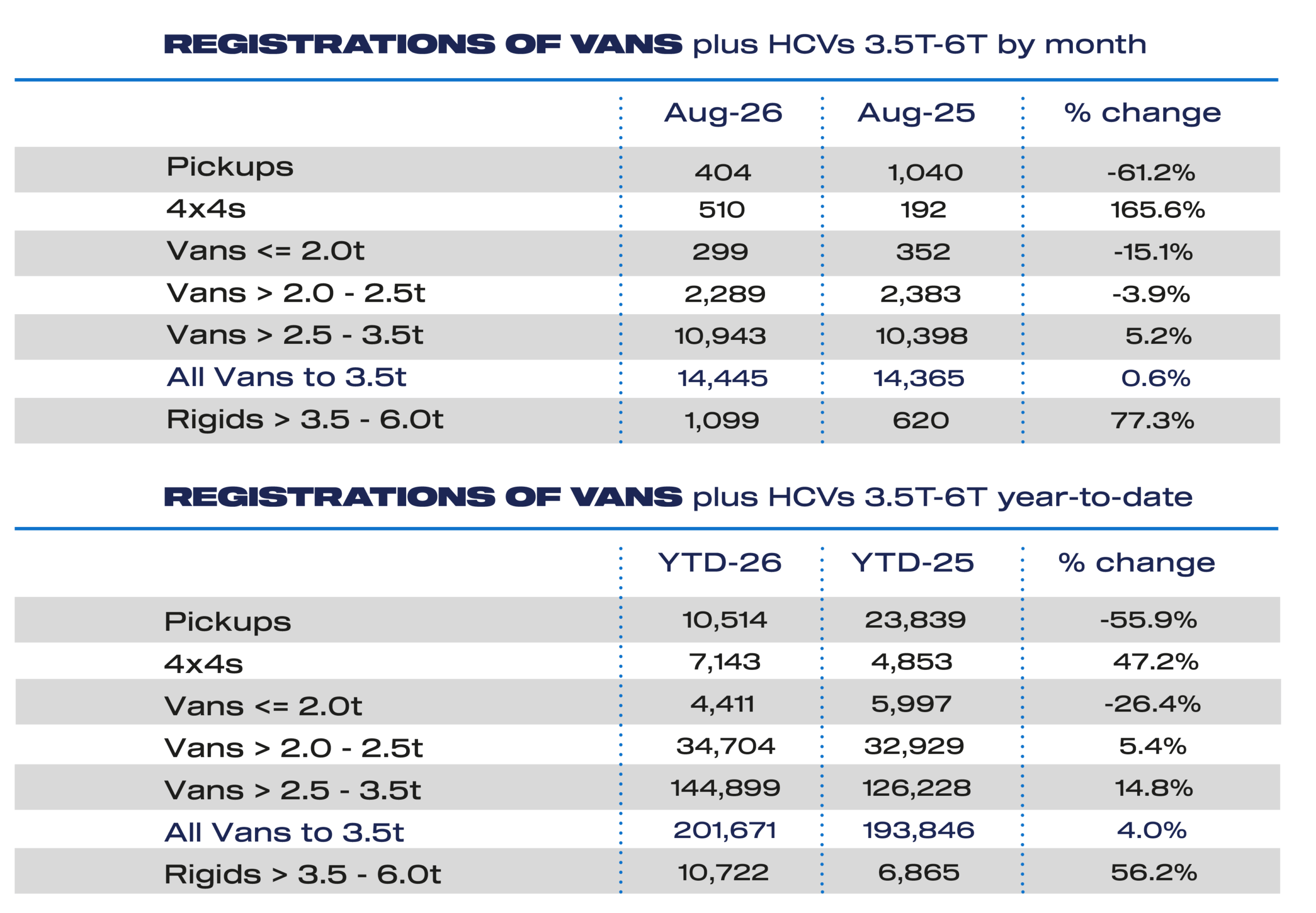
While overall demand remains positive, market growth continues to be reliant on rising large van registrations, while pickup sales fell sharply once again year-on-year in August. Meanwhile, battery electric van uptake increased by 26% last month,
Electric vans accounted for 16% of all light van registrations last month, which is a record high for August. That said, demand still isn’t strong enough to meet the annual government-mandated target.
Rising large van demand conceals shrinking sales in other categories
With new van registrations improving by 1% last month, growth in August was largely fueled by demand for large vans (2.5 to 3.5 tonnes), which increased 5% to nearly 11,000 registrations. Keep in mind that large van category is already by far the largest in the LCV market, dwarfing demand for small and medium vans and accounting for almost three-quarters (72%) of all new LCV registrations so far in 2026, up from 63% at this point in 2025.
The most dramatic percentage growth per category in August belongs to the 4×4 class, which grew by 165% year-on-year to around 500 new registrations, perhaps taking buyers from the pickup sector which is weathering a sharp decline in buyer demand. Pickup registrations fell 61% to around 400 registrations. Pickups now account for just 5% of the LCV market, compared with 13% a year ago.
The ongoing weakness follows changes introduced in April 2025 that reclassified double-cab pickups as company cars for Benefit-in-Kind taxation purposes, significantly increasing costs for many business users.
The small van sector (under 2 tonnes) is down by over a quarter when you look at the year at large, and despite sales picking up in July, monthly registrations fell once again in August, this time by 15% year-on-year. The medium van category (between 2 to 2.5 tonnes) also recorded less monthly sales year-on-year, down 4%.
Record August market share for electric vans
Battery electric van (BEV) registrations increased by a significant 26% in August to around 2,400 units, giving electric vans a monthly market share of 16%, up from 11% in August last year. The SMMT says that is a record BEV market share for the month of August, but does add that August’s typically low overall volumes can exaggerate percentage shifts.
Nevertheless, this represents healthy growth in volume terms, with BEV registrations accounting for 11% of the total LCV registrations in 2026. That is still significantly below the government’s Zero Emission Vehicle (ZEV) Mandate target of 24% market share for 2026, however. It is worth noting that 10% of all LCV sales being electric was the government target in 2024.
Diesel remains dominant, representing 77% of August registrations and 82% of the market January-to-August.
Good month, bad month
While the overall market up by around a single percentage point in August, not everyone benefitted from increasing demand. Some brands will be celebrating a stronger performance than others.
Those brands of note are Volkswagen and Land Rover – which all managed to improve on their August 2025 registration totals by 21% and 148% respectively. Other above-average performers include Renault, Mercedes-Benz, Iveco, Ineos, Farizon, MAN, Maxus, Mitsubishi and Renault Trucks. These brands outperformed the overall LCV market by at least 10%.
Meanwhile, things were not as positive for Citroen, Toyota, Vauxhall, Fuso and Isuzu. All of these brands underachieved against the overall market by at least 10%. It was also a particularly bad month for Ford with registrations down 24%. Keep in mind though that Ford is by far and away the biggest van brand in the UK, and while sales are down, the marque still registered over 3,300 new models in August, more than any other brand.
The following brands were about where you’d expect them to be: KGM, Nissan, Kia, Peugeot and Isuzu Trucks. All of these brands had results that were within +/- 10% of the overall market.
Sprinter settles for silver in August
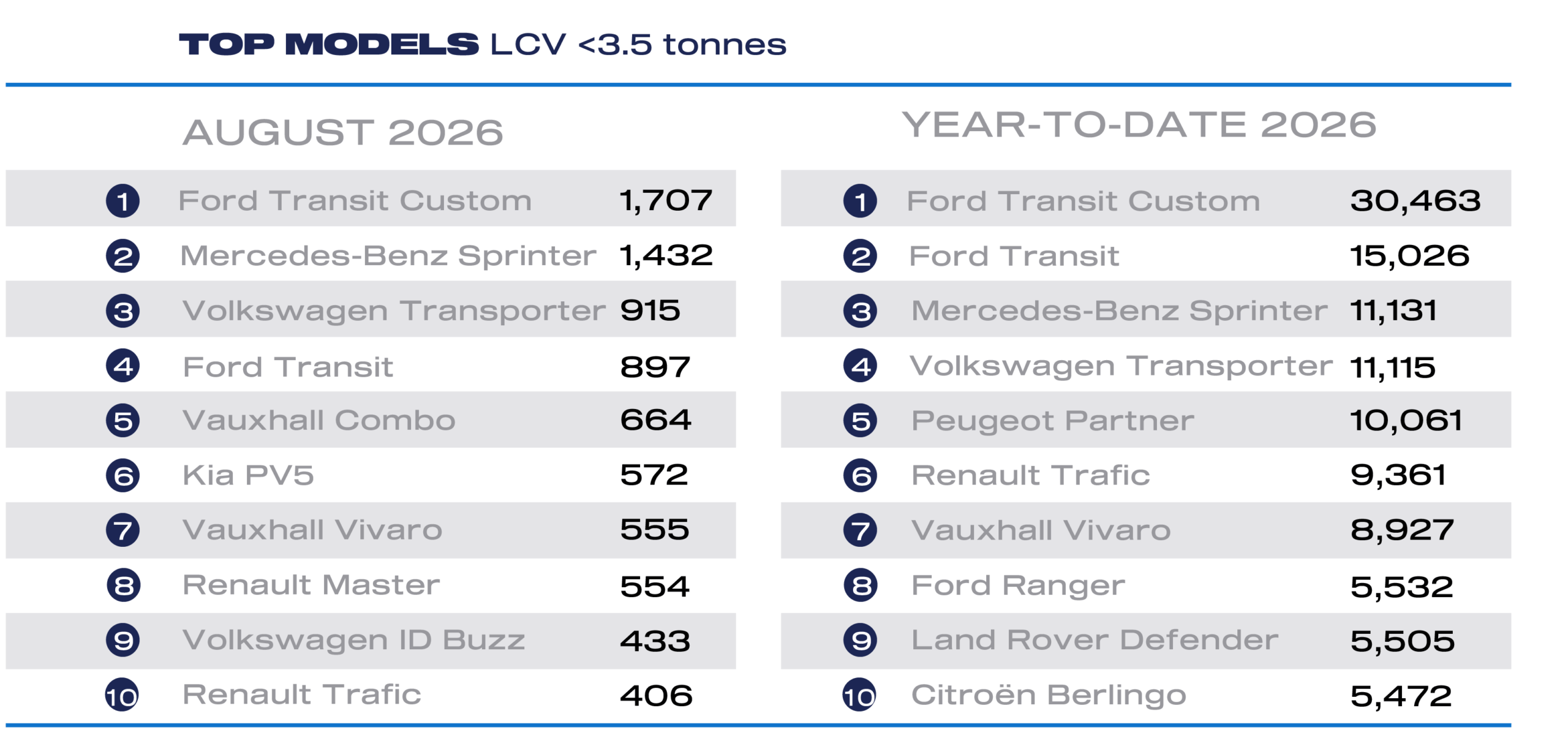
The Ford Transit Custom maintained its position as Britain’s best-selling van in August with over 1,700 registrations. But it was given a strong sales challenge by the Mercedes-Benz Sprinter last month which recorded over 1,400 registrations. The monthly LCV sales leaderboard isn’t usually this close – the Transit Custom is rarely challenged for top spot, particularly by models outside the Ford family.
The Volkswagen Transporter also recorded strong sales totals in August, as the Volkswagen and Mercedes battle it out for the LCV market’s final sales tally podium place in the annual chart, behind the Ford Transit in second. Other notable top ten finishers in August were the Kia PV5 and Volkswagen ID. Buzz, both indicators of the rising demand for electric vans among LCV buyers.


You must be logged in to post a comment.