




The UK new light commercial vehicle (LCV) market recorded its seventh consecutive month of growth in October, with registrations increasing by 11% year-on-year, according to the latest figures from the Society of Motor Manufacturers and Traders (SMMT).
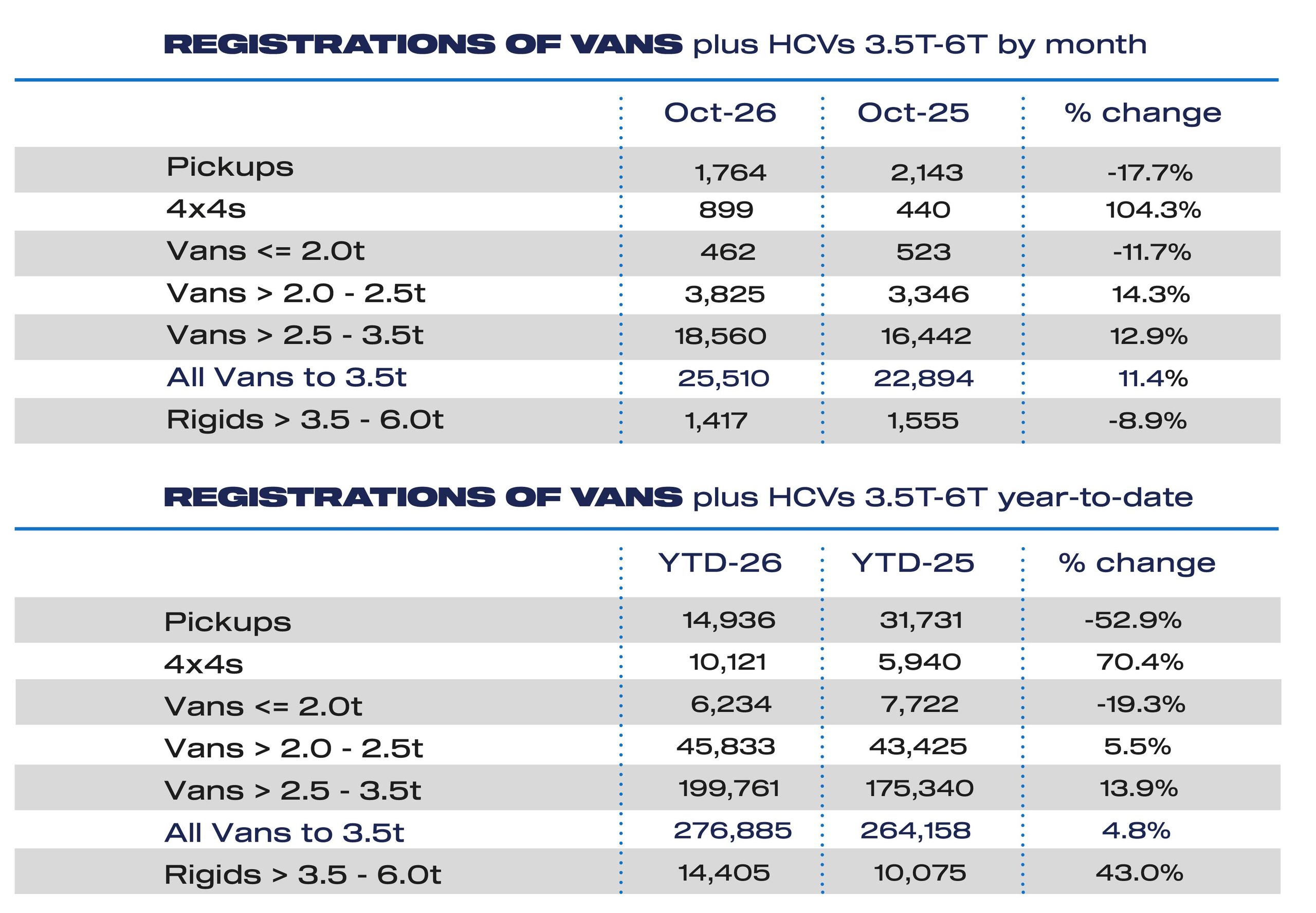
A total of 25,510 new vans, pickups and 4x4s were registered last month, compared with just under 22,900 in October 2025. The positive result continues the market’s recovery following a difficult start to the year, with 2026 registrations now up by almost 5% after ten months, reaching nearly 277,000 vehicles.
As has been the case throughout much of the year, growing demand for large vans continues to support the overall market, while pickup registrations remain well below last year’s levels. Meanwhile, battery electric van registrations jumped by 58% in October to achieve a new monthly record for this time of year, although uptake remains some distance from the government’s annual targets.
Large vans continue to drive growth as pickup sales decline
The majority of October’s market growth came from the large van category (2.5 to 3.5 tonnes), which recorded a 13% increase to more than 18,500 registrations. This category accounted for almost three-quarters (73%) of all new LCV registrations last month, underlining just how heavily the market relies on larger commercial vehicles.
Medium vans (2.0 to 2.5 tonnes) also performed well, recording 14% growth to more than 3,800 registrations. However, it was a different story for smaller vans weighing less than two tonnes, which saw registrations decline by 12% to just 462 vehicles. Small van demand is now down 19% across the year to date.
The largest percentage increase came from the 4×4 category, which more than doubled its October 2025 performance to reach almost 900 registrations.
Conversely, pickup registrations fell by 18% to fewer than 1,800 units. This continues a troubling year for the pickup sector, with registrations down by 53% across the first ten months of 2026 – from almost 32,000 last year to fewer than 15,000 this year.
The continued decline follows the tax changes introduced in April 2025, which reclassified double-cab pickups as company cars for Benefit-in-Kind taxation purposes, significantly increasing costs for many business users.
Electric van registrations jump 58%, but still trail government targets
Battery electric van (BEV) registrations increased by 58% in October to almost 3,400 units, giving electric models a 13% share of the market, up from just over 9% in October last year.
That represents the strongest October on record for electric LCV registrations and the biggest year-on-year percentage increase of any month so far in 2026.
The SMMT’s figures include eligible electric commercial vehicles weighing between 3.5 and 4.25 tonnes, as well as conventional vans weighing up to 3.5 tonnes. Of October’s electric registrations, 2,781 were in the lighter category, with the remaining 588 coming from the heavier electric vehicles. Across the first ten months of 2026, electric registrations have increased by 27%, with more than 30,700 vehicles registered.
While electric van uptake is clearly improving, it remains some distance from the government’s headline Zero Emission Vehicle (ZEV) mandate target of 24% for 2026. Manufacturers have some flexibility in meeting the mandate, but the SMMT continues to argue that targets need to be more closely aligned with actual demand.
The industry body forecasts that electric vans weighing up to 3.5 tonnes will account for just over 10% of the market by the end of the year, and is urging the government to make significant changes as part of its ongoing mandate review.
Diesel remains comfortably the dominant fuel type, accounting for almost 80% of October’s registrations and 82% of the market across the year to date.
Good month, bad month
While the overall LCV market grew by 11% in October, not every manufacturer enjoyed the same success. Some brands recorded substantial improvements over their October 2025 totals, while others struggled despite the wider market’s growth.
Among the month’s standout performers were Mercedes-Benz, Renault and Vauxhall, which increased registrations by 60%, 57% and 47% respectively. Land Rover also enjoyed a particularly strong month, with registrations rising by 130%.
Other above-average performers included Maxus, Fiat, Iveco, Farizon, Ineos and Dacia. All of these brands outperformed the overall LCV market’s growth by at least ten percentage points, although some increases came from very small sales volumes.
Meanwhile, things were not as positive for Ford and Nissan, which both recorded registration declines of around 24%. Other underperformers included Isuzu, Isuzu Trucks, KGM, Fuso, GWM, Renault Trucks and LEVC. These brands all performed at least ten percentage points below the overall market’s growth rate.
Ford’s decline is particularly noteworthy. The manufacturer registered around 6,500 new vehicles in October, compared with more than 8,500 in the same month last year. Despite this drop, Ford remains comfortably the UK’s biggest LCV brand, accounting for more than a quarter of all registrations last month.
The following brands were about where you’d expect them to be: Volkswagen, Peugeot, Citroën, Toyota and MAN. All recorded results within ten percentage points either side of the overall market’s growth.
Transit Custom leads as Sprinter takes second once again
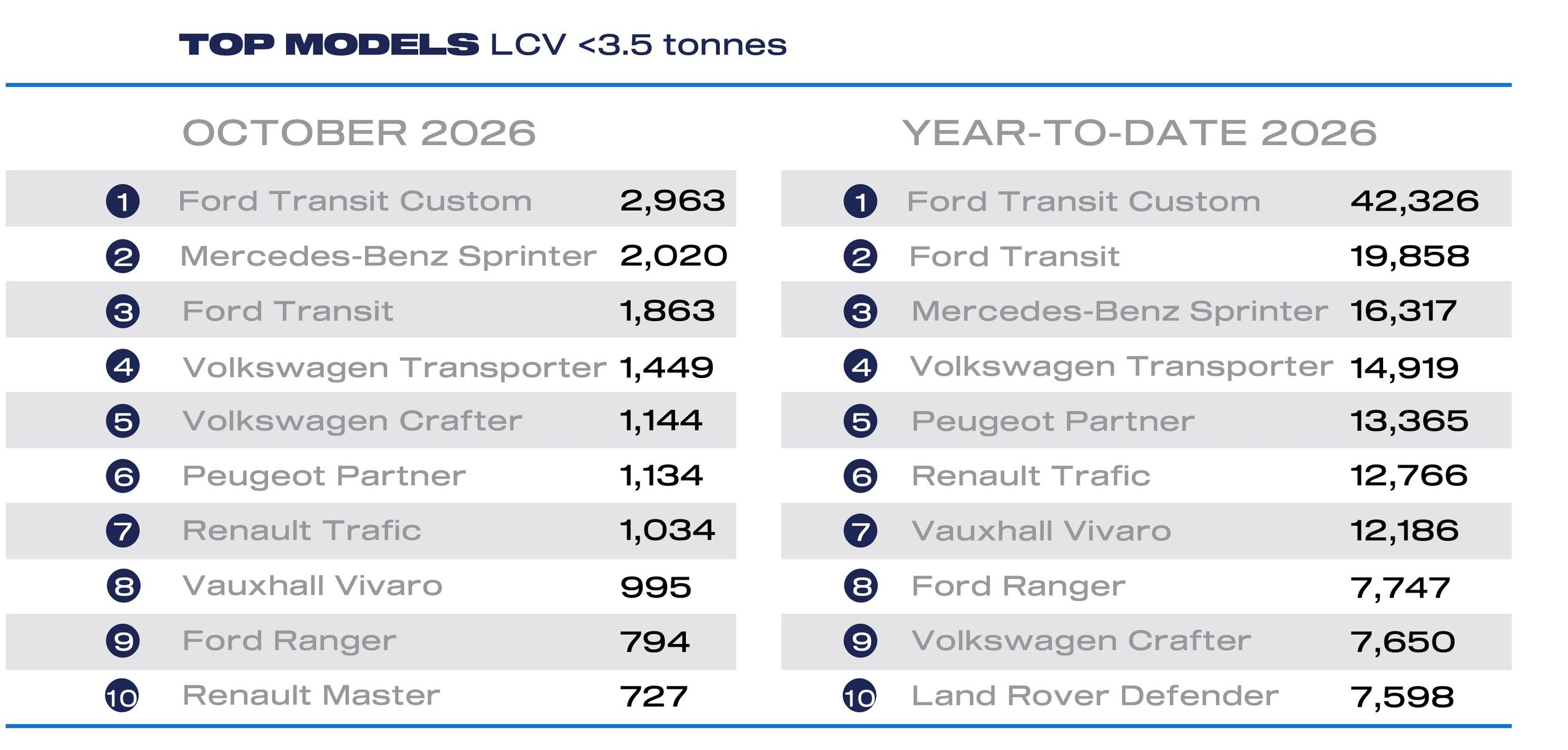
The Ford Transit Custom maintained its position as Britain’s best-selling new van in October, recording almost 3,000 registrations. Despite Ford’s overall sales decline, the Transit Custom remains comfortably ahead of its competitors, with more than 42,000 registrations so far in 2026.
The Mercedes-Benz Sprinter held onto second place for the month, recording over 2,000 registrations, ahead of the larger Ford Transit in third. The Volkswagen Transporter finished fourth, followed by its larger Volkswagen Crafter sibling in fifth. The Peugeot Partner, Renault Trafic and Vauxhall Vivaro occupied sixth, seventh and eighth respectively.
The Ford Ranger was ninth with just under 800 registrations, remaining October’s best-selling pickup despite the wider sector’s ongoing decline. The Renault Master completed the monthly top ten.
Looking at the year as a whole, the Transit Custom remains comfortably in first place, with more than twice as many registrations as the second-placed Ford Transit. The Mercedes-Benz Sprinter is third, ahead of the Volkswagen Transporter and Peugeot Partner.


You must be logged in to post a comment.